Service guide
When & Why You Should Service Your Air Conditioning System
Air conditioning works best when it is kept clean, checked and maintained before faults become urgent. This guide explains when to book a service and what routine servicing is designed to help with.
Quick answer
Once a year is a good starting point for most home systems. If the system works hard, 6-monthly servicing is usually the smarter route. Book the service before you need the repair.
01
The short answer
Most air conditioning systems should be serviced at least once a year. For many homes, annual servicing is enough to keep the system cleaner, easier to trust and ready for warmer weather.
Higher-use systems need more attention. If the system runs for long hours, cools a busy space or is used in a commercial setting, 6-monthly servicing is usually a better maintenance plan.
02
When should you service your AC?
The best time to service your air conditioning is before you rely on it every day. Spring or early summer is often a sensible window because the system can be checked before the heaviest cooling demand.
- Before heavy summer use, so the system is checked before it is working hardest.
- After a long period of inactivity, especially if the system has not been used through autumn or winter.
- Once a year for most home systems as a sensible starting point.
- Every 6 months for systems that run often, serve busy rooms or support commercial spaces.
- Sooner if cooling drops, water appears, smells start, noise changes or energy use seems higher.
03
Why servicing matters
Air conditioning moves air, collects dust and deals with moisture. Over time, filters can block, drains can slow down and outdoor units can become restricted by dirt or poor airflow.
Regular servicing helps maintain comfort, cleaner airflow, efficiency and reliability. It can also help spot small issues before they turn into expensive repairs or inconvenient breakdowns.
04
Signs your AC needs attention
Do not wait for a complete failure if the system starts behaving differently. A service or inspection is worth arranging when performance changes or the system gives you warning signs.
05
What happens during a service?
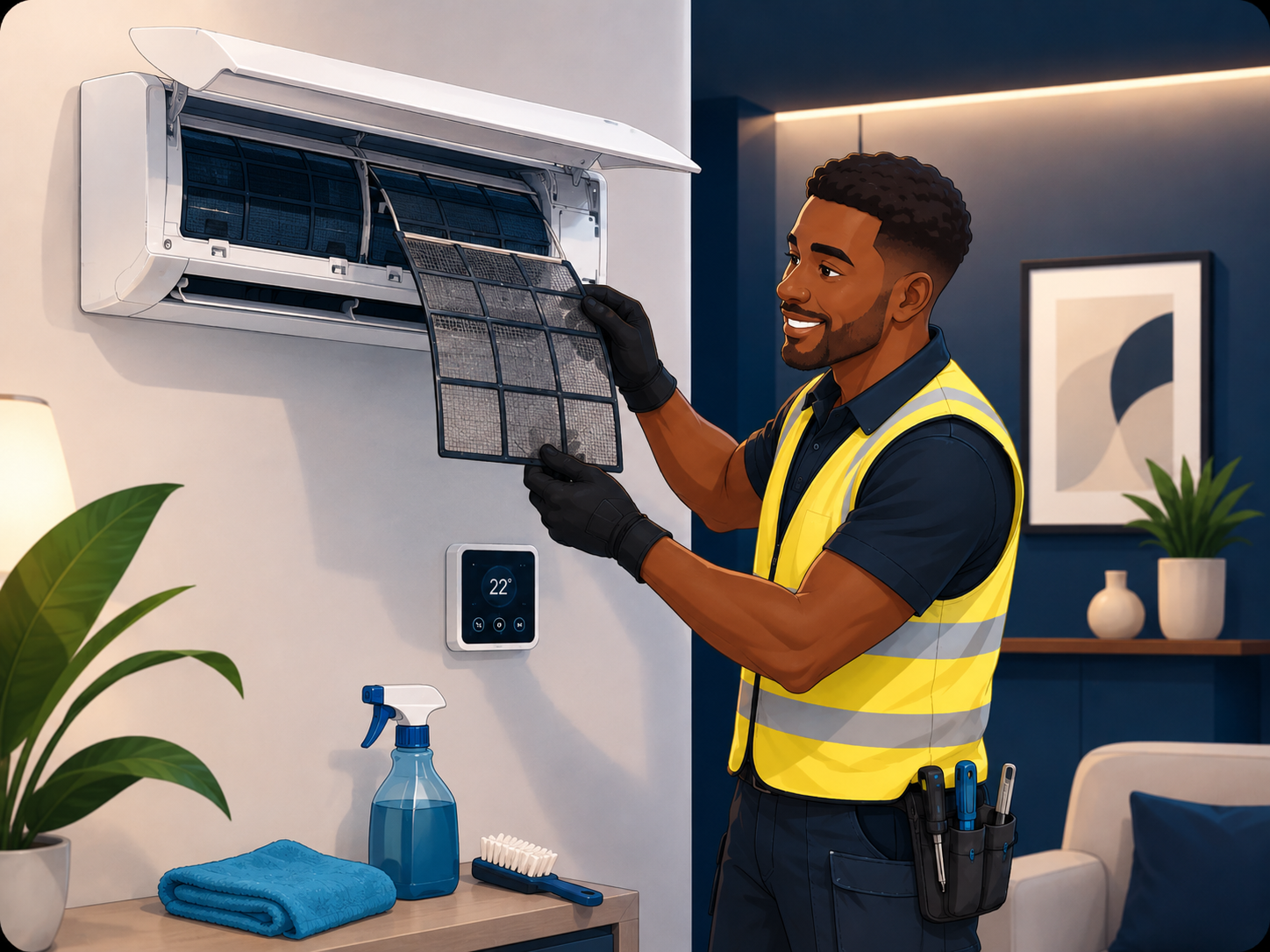
A routine service is designed to check the general condition and operation of the system. The exact checks depend on the equipment, access and what the engineer finds on site.
- Filters and indoor unit condition
- Coils, airflow and visible dirt build-up
- Condensate drains and signs of leaks
- Outdoor unit condition and airflow around it
- Basic electrical condition and safe operation checks
- Controls, temperature response and general running performance
Refrigerant-related work must be handled properly by suitably certified engineers. If extra repair work is needed, that is separate from routine servicing and should be discussed before proceeding.
06
Domestic vs commercial servicing
Domestic systems are often straightforward. Clear photos of the indoor unit, outdoor unit, controller and model labels can sometimes help with an estimate before a visit is arranged.
Commercial sites usually need more planning. For commercial sites, a free survey helps us understand the number of systems, access, usage and maintenance needs before quoting. Commercial systems may also have extra compliance considerations depending on the equipment and site.
07
Final advice from DBX1 AC Services
Book the service before you need the repair. A planned visit is easier to manage than a hot-day breakdown, especially for businesses, bedrooms, offices, treatment rooms and high-use spaces.
If your system is working normally, start with annual servicing. If it works hard, step up to a 6-monthly service plan. If it is already leaking, noisy, smelly or not cooling properly, ask for help before the issue gets worse.